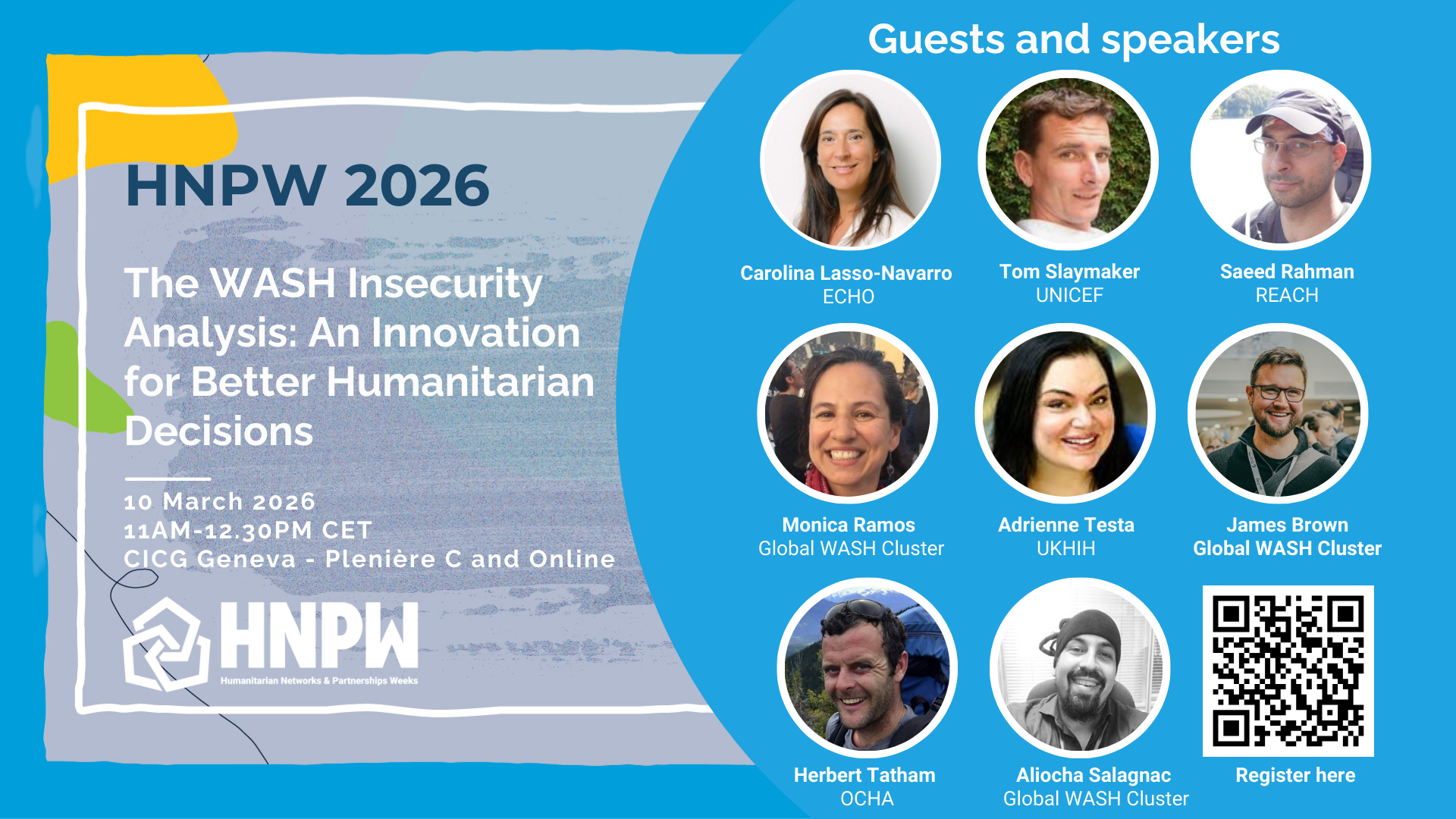
The WASH Insecurity Analysis (WIA) is a new global framework endorsed by the IASC to identify where and why populations face the greatest WASH-related risks. Moving beyond traditional access metrics, the WIA integrates four equally weighted dimensions—services, hazard exposure, hazard impact, and WASH-related vulnerability—to quantify the population at risk and inform strategic prioritization in humanitarian and nexus contexts to support evidence-based resource allocation. This session will present the first results from the global rollout of the WIA in countries including Mali, Niger, South Sudan, and El Salvador, share operational insights from national coordination platforms, and demonstrate how WIA supports the humanitarian reset by enabling more targeted, anticipatory, and locally driven decision-making. Participants will explore how the WIA can strengthen collective outcomes, improve resource allocation in a shrinking funding environment, and support governments and partners in risk analysis, preparedness, and response planning. Objectives / Expected Outcomes: - Present key findings from WIA country analyses and highlight their operational relevance, South Sudan, Mali, El Salvador, Niger and Sudan.
- Demonstrate how WIA strengthens prioritization, targeting, and humanitarian–development coherence.
- Provide a platform for national coordination platforms to share lessons on integrating WIA into planning and advocacy.
- Identify opportunities for applying WIA to anticipatory action, nexus programming, and localized decision-making.
- Advocate for investments in the humanitarian and development WASH sector.
Key Questions to Be Addressed: - How does WIA improve prioritization and response in acute and protracted crises?
- How can national platforms integrate WIA results into planning, advocacy, and resource mobilization?
- What role can WIA play in the humanitarian reset and in addressing shrinking funding?
- How can interagency partners adopt WIA for multisectoral risk analysis and anticipatory action?
Target Audience: Humanitarian Partners, Global Clusters, IASC, OCHA, ICVA, Cluster coordinators (global and national), government authorities, local and national actors, donors, anticipatory action actors, data and IM specialists, development partners, andinterclusterteams.Contribution to the Humanitarian Reset: WIA directly supports the humanitarian reset by introducing a predictable, evidence-based, and risk-informed framework for prioritization. It operationalizes localization by enabling analysis at subnational level, supports anticipatory action, and strengthens accountability in resource allocation. It embeds communities at the core of decision-making, ensuring that needs are identified through inclusive planning processes and translated into coordinated responses led by local and national actors in partnership with government authorities. It reduces duplication and aligns humanitarian and development planning around shared, comparable risk metrics. Why HNPW Is the Right Platform: HNPW provides a system-wide space for promoting common analytical approaches and cross-sectoral risk frameworks. Presenting WIA here accelerates uptake across clusters, donors, and governments, fostering shared methodologies and enabling stronger, more coordinated humanitarian and nexus programming. https://www.washcluster.net/WASH-insecurity-analysis |